


problem
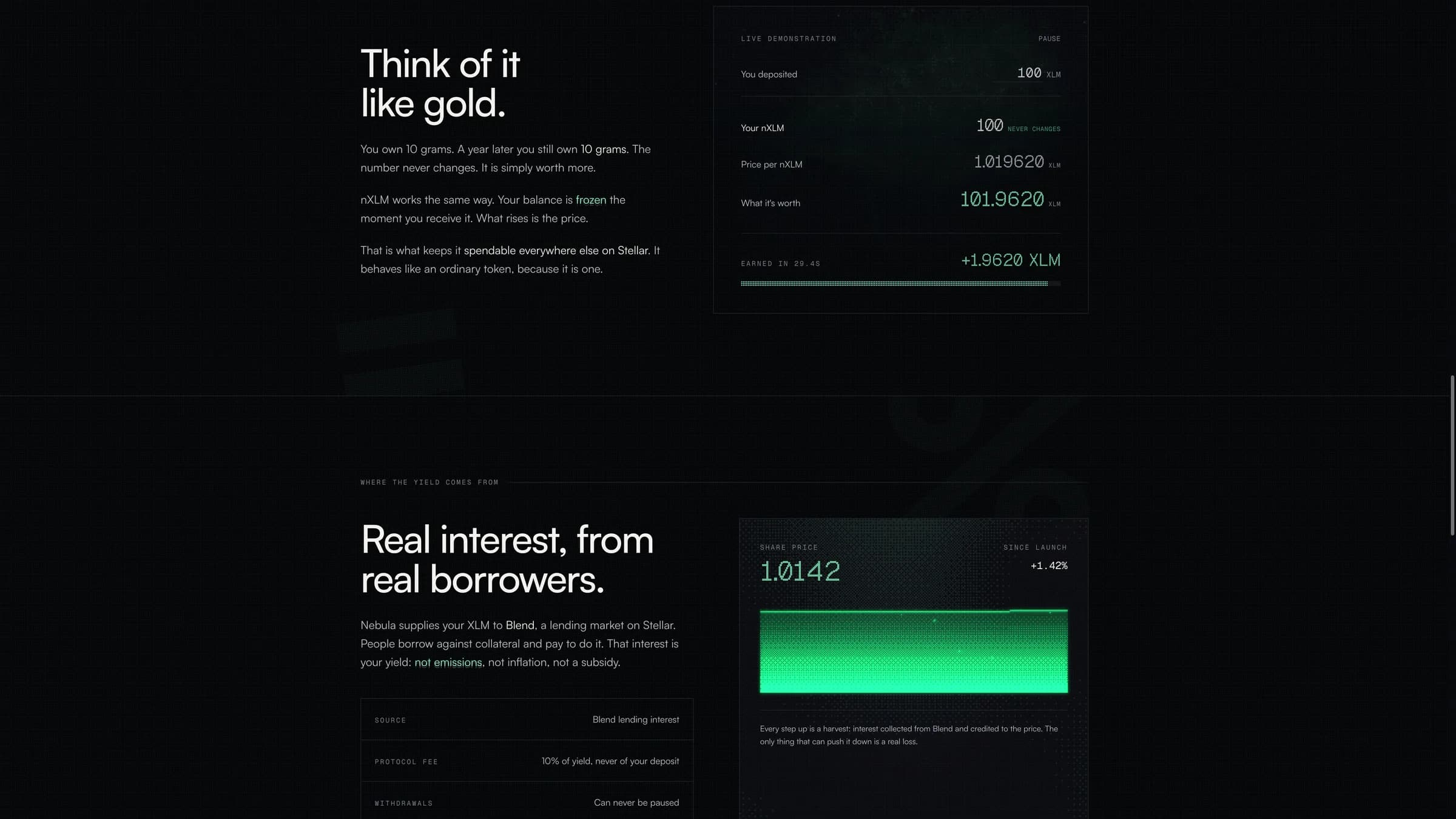
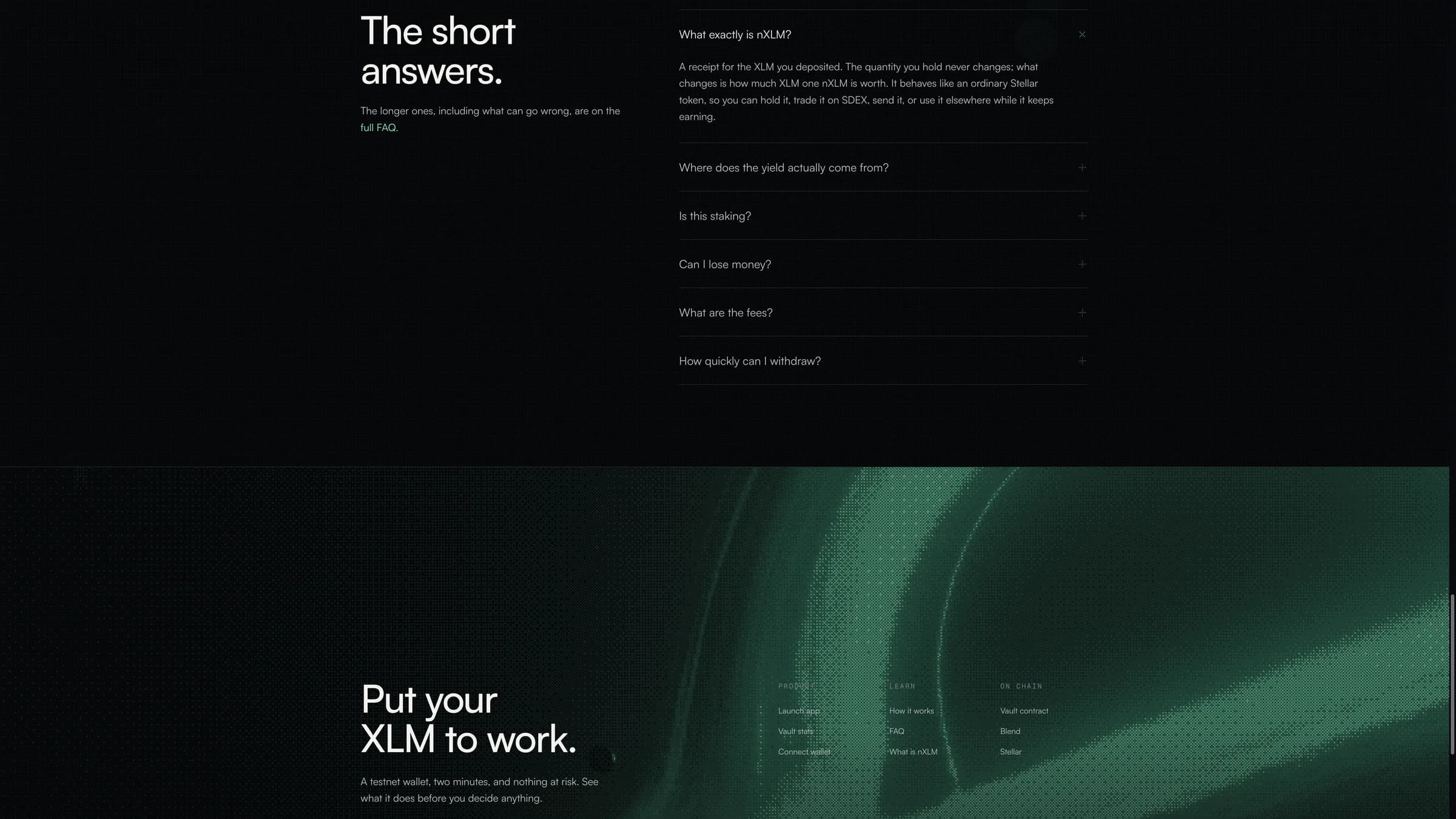
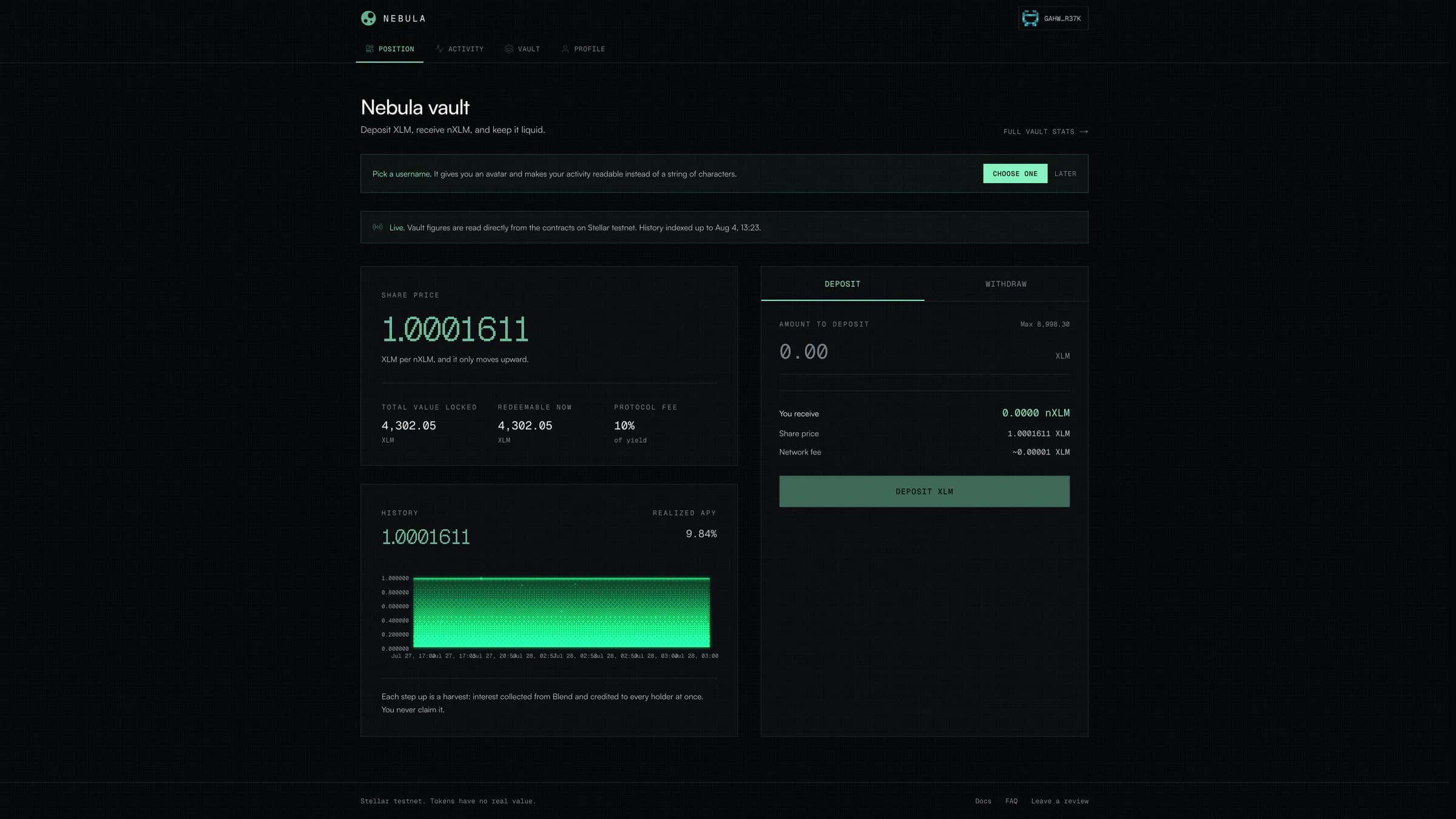
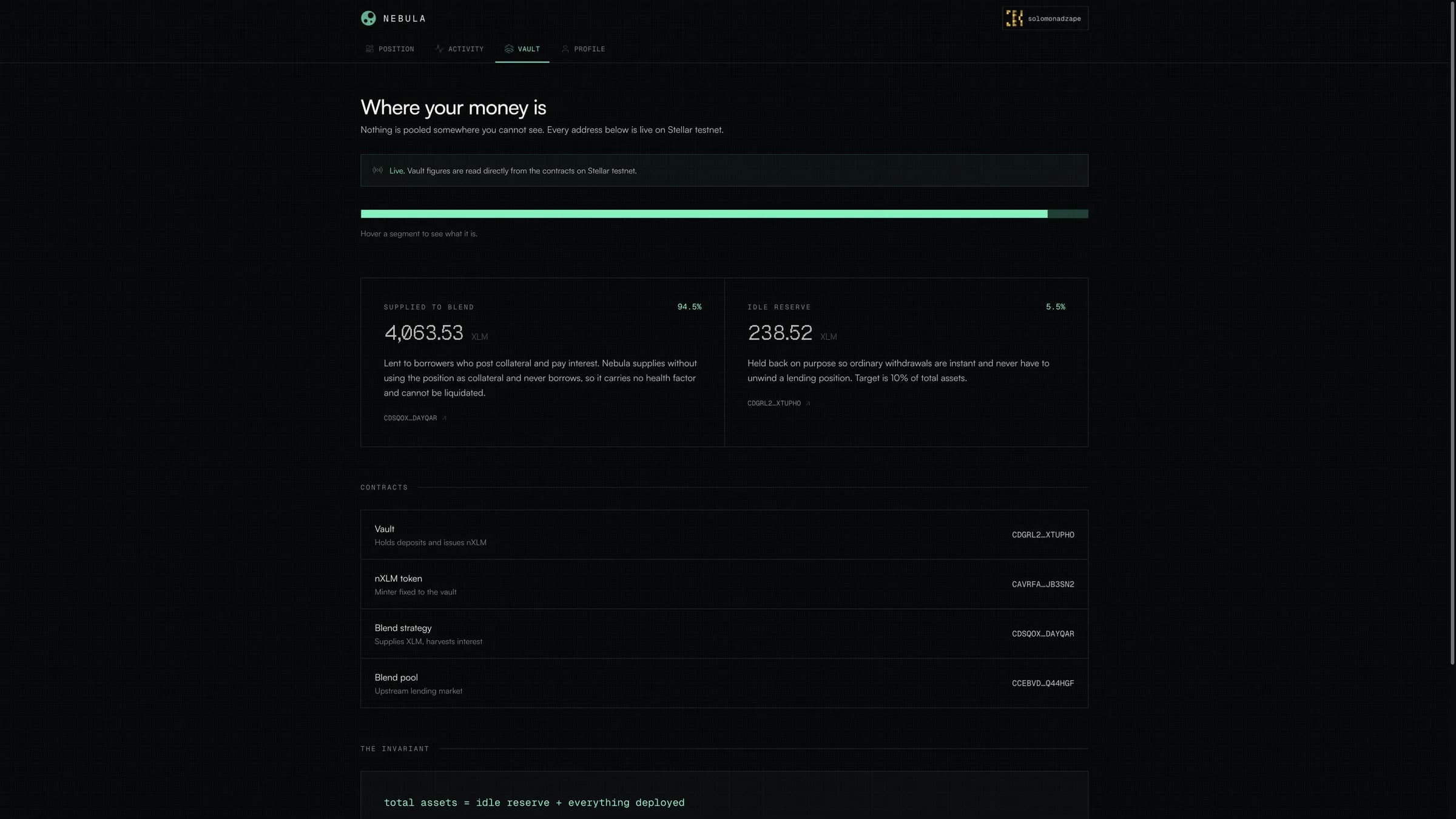
Yield on Stellar exists across lending and liquidity venues, but using it requires several manual steps and usually leaves the resulting position illiquid. Nebula explores a vault abstraction: deposit XLM, receive nXLM, and keep a transferable claim whose redemption value changes with the vault.
my role
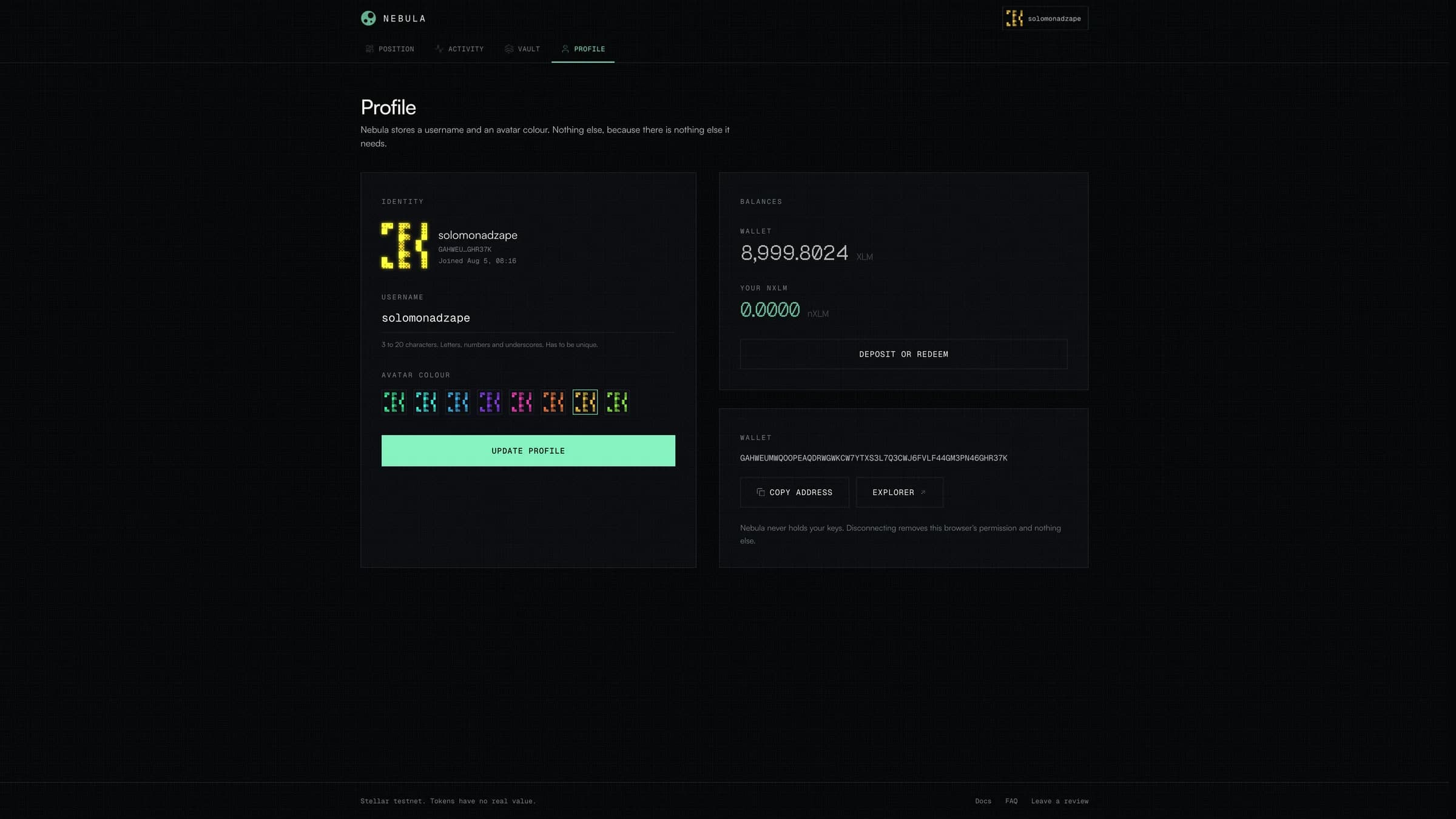
I built the responsive wallet interface, signed deposit and redemption flows, protocol dashboard, Soroban contracts, event indexer, and hosted PostgreSQL reporting layer.
decisions
- The share price is derived from tracked assets and supply, with conversions rounded against the caller so repeated dust operations cannot drain value.
- Direct token donations do not alter tracked assets, preventing the classic first-depositor inflation path.
- Redemptions remain available even when other operations are paused, and venue losses are marked before exits are priced.
- The interface identifies testnet state and separates protocol explanation from wallet actions.
evidence
- 64 contract tests cover accounting, lifecycle, access control, rounding, liquidity, drawdowns, and attack cases.
- An earlier testnet deployment exercised the real allowance, transfer, Blend supply, harvest, and redemption paths.
- The event indexer records contract activity into PostgreSQL through an idempotent scheduled sync.
limitations
Nebula is unaudited and available on testnet only. The currently deployed contracts predate the latest security changes in the repository, so the live interface is demonstration evidence—not a current secure release. It uses one Blend strategy, has no production multisig or timelock, and should not hold real funds.