
stack
next.js 16, react 19, typescript, soroban, stellar sdk, supabase, recharts, tailwind v4
problem
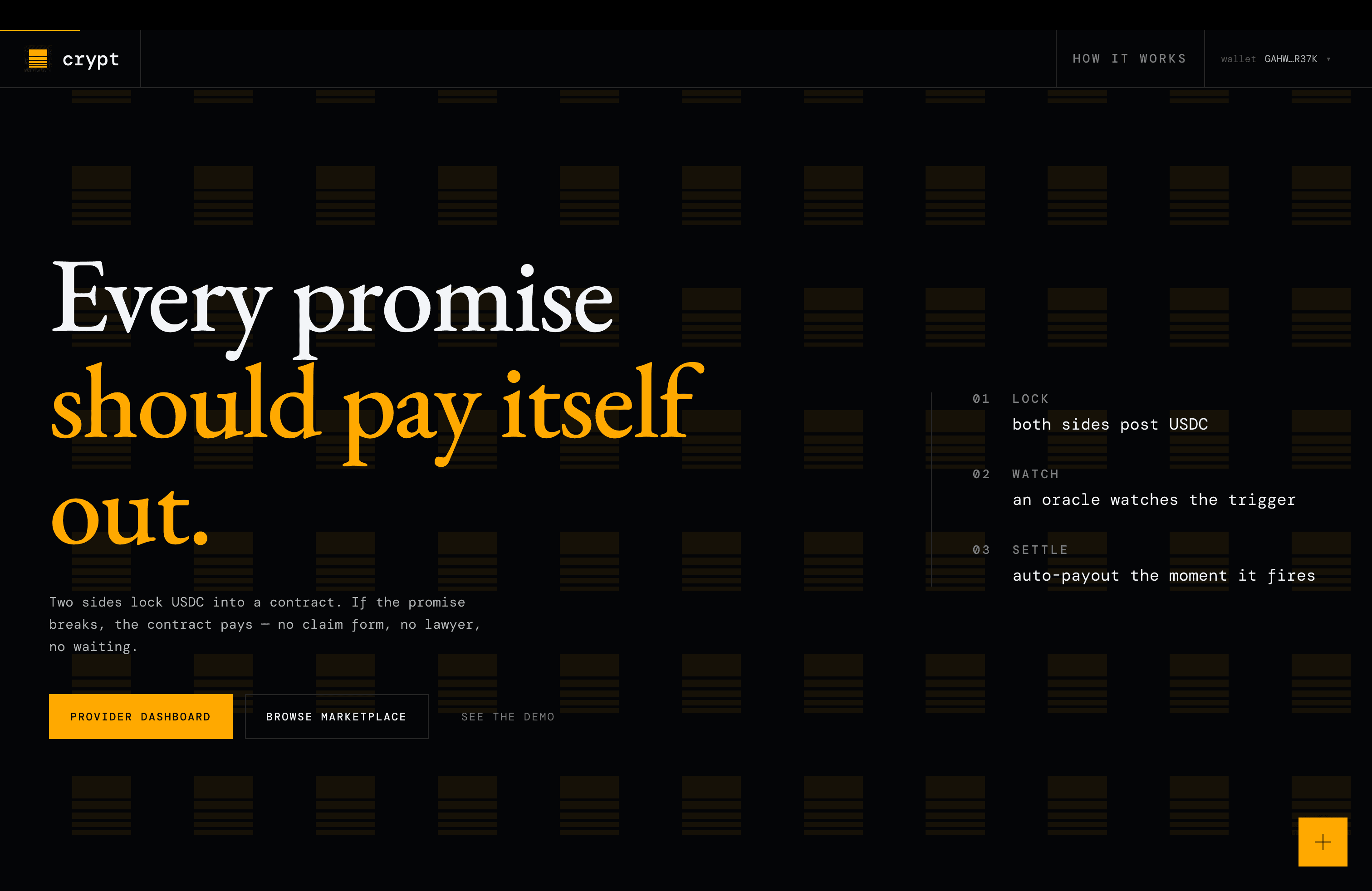
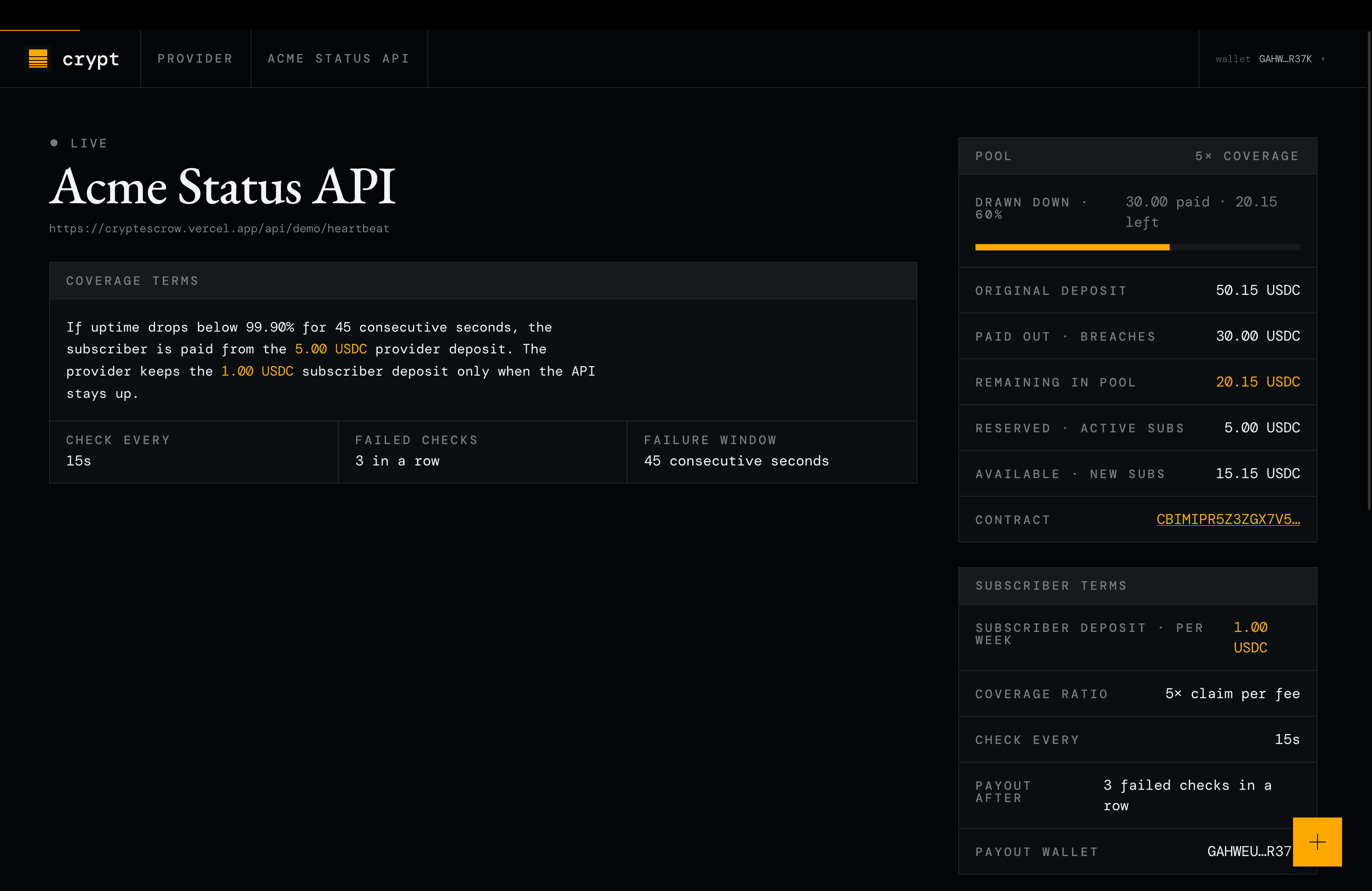
API service-level agreements are usually promises in a document. When a provider goes down, a small customer often has no practical way to enforce the refund without emails, invoices, and goodwill.
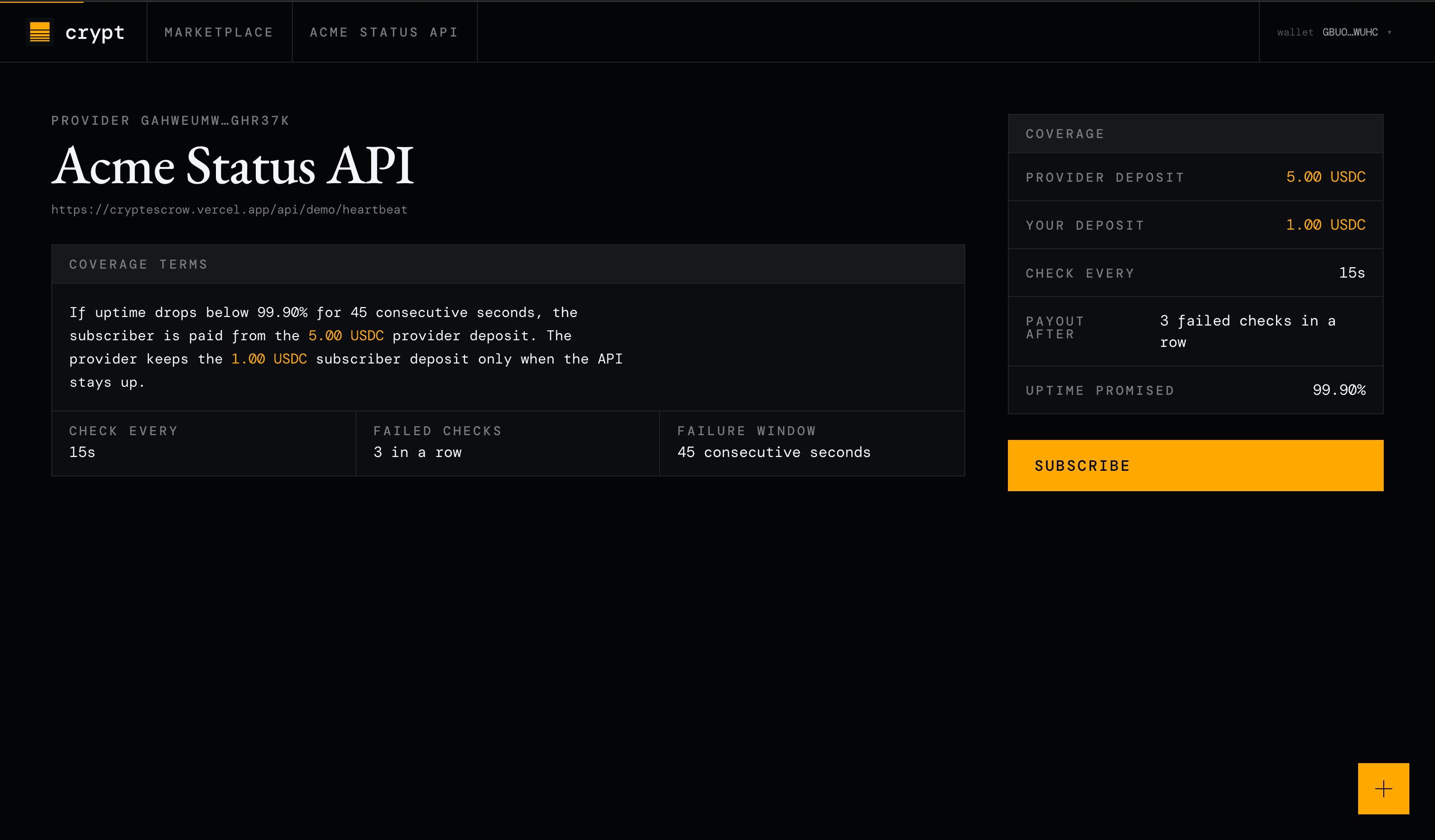
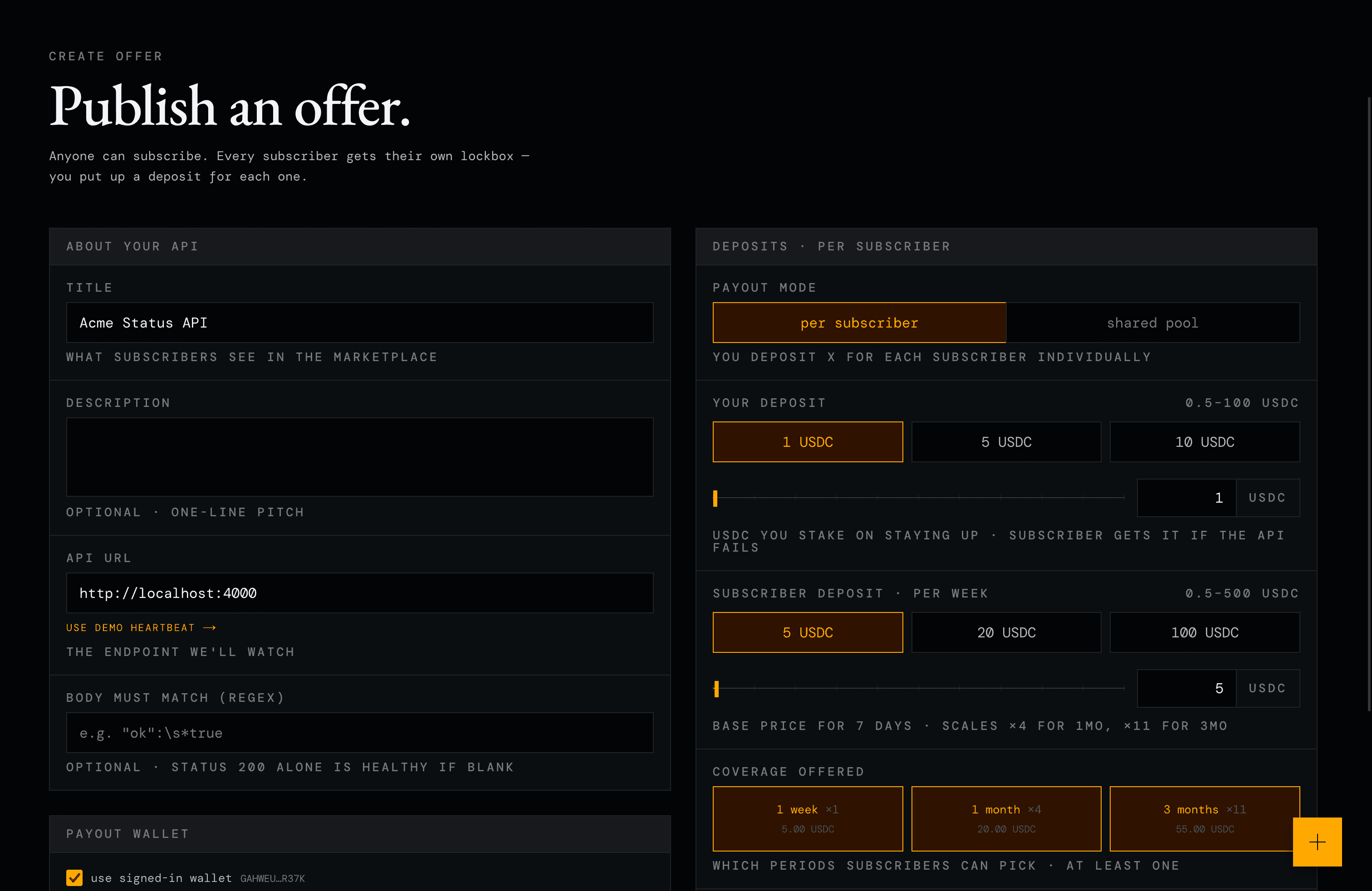
Crypt turns the promise into a testnet prototype: a provider locks a USDC guarantee in a Soroban escrow, a health-check oracle records consecutive failures, and sustained downtime makes the guarantee releasable to the subscriber.
my role
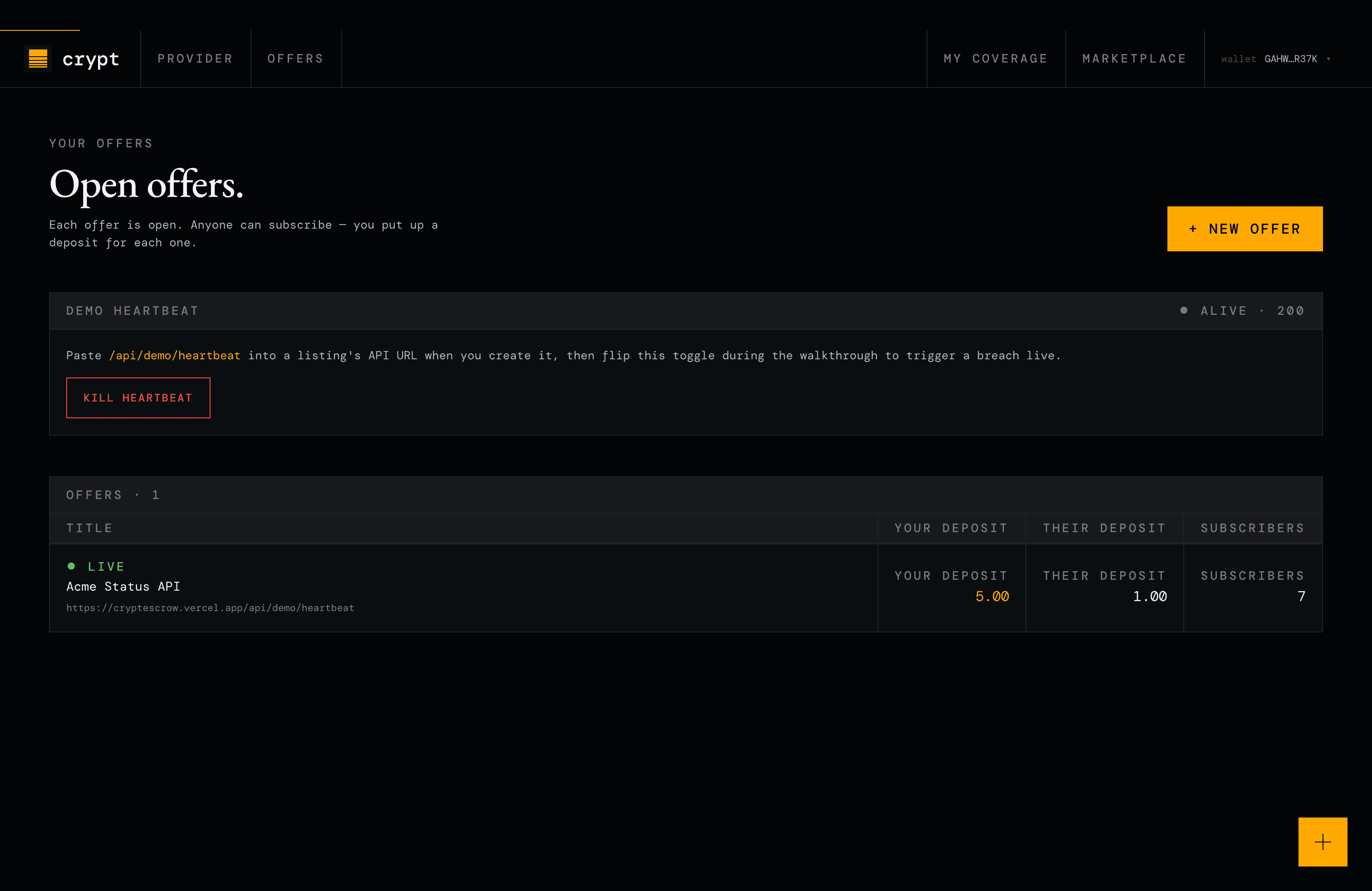
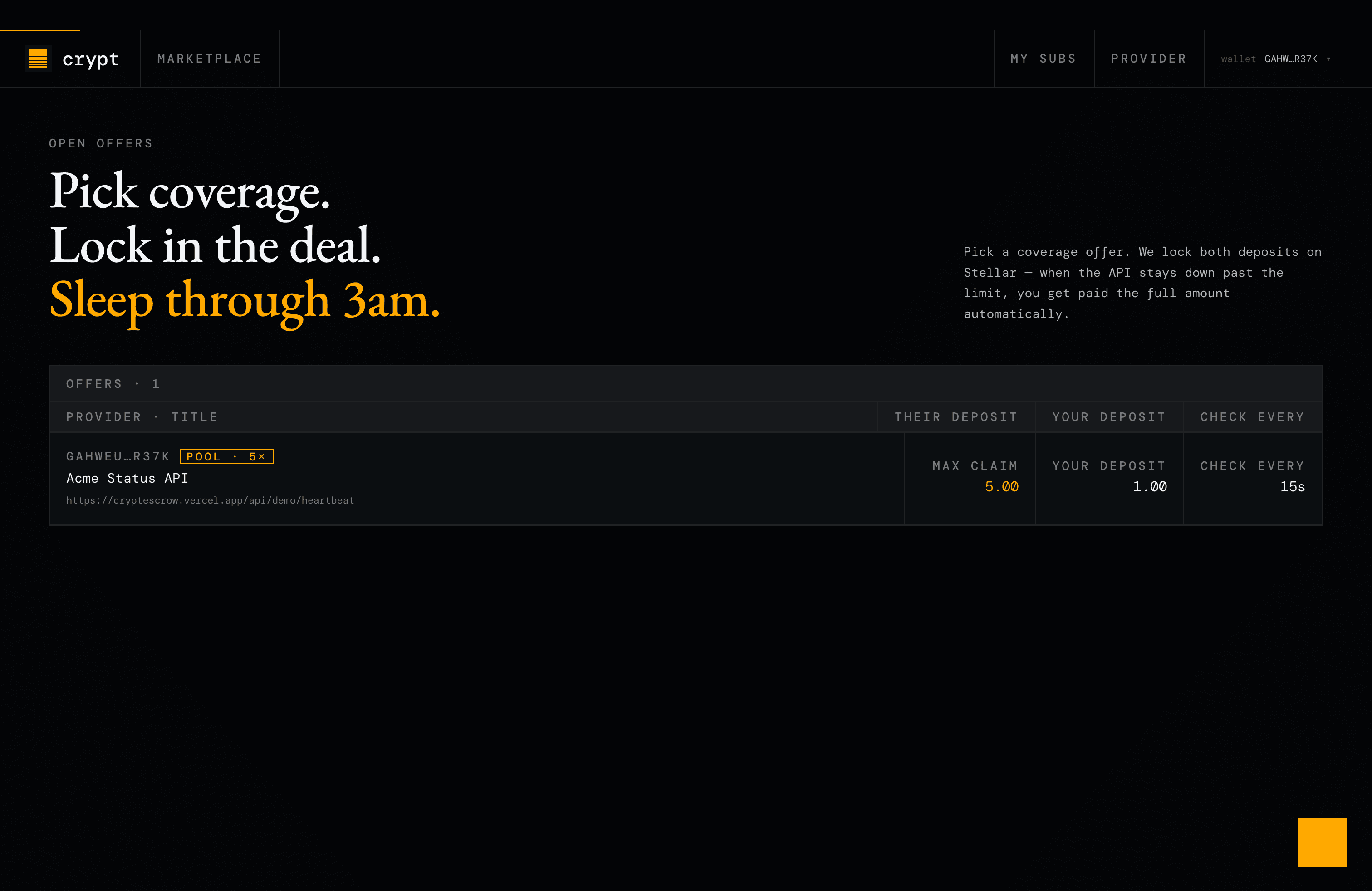
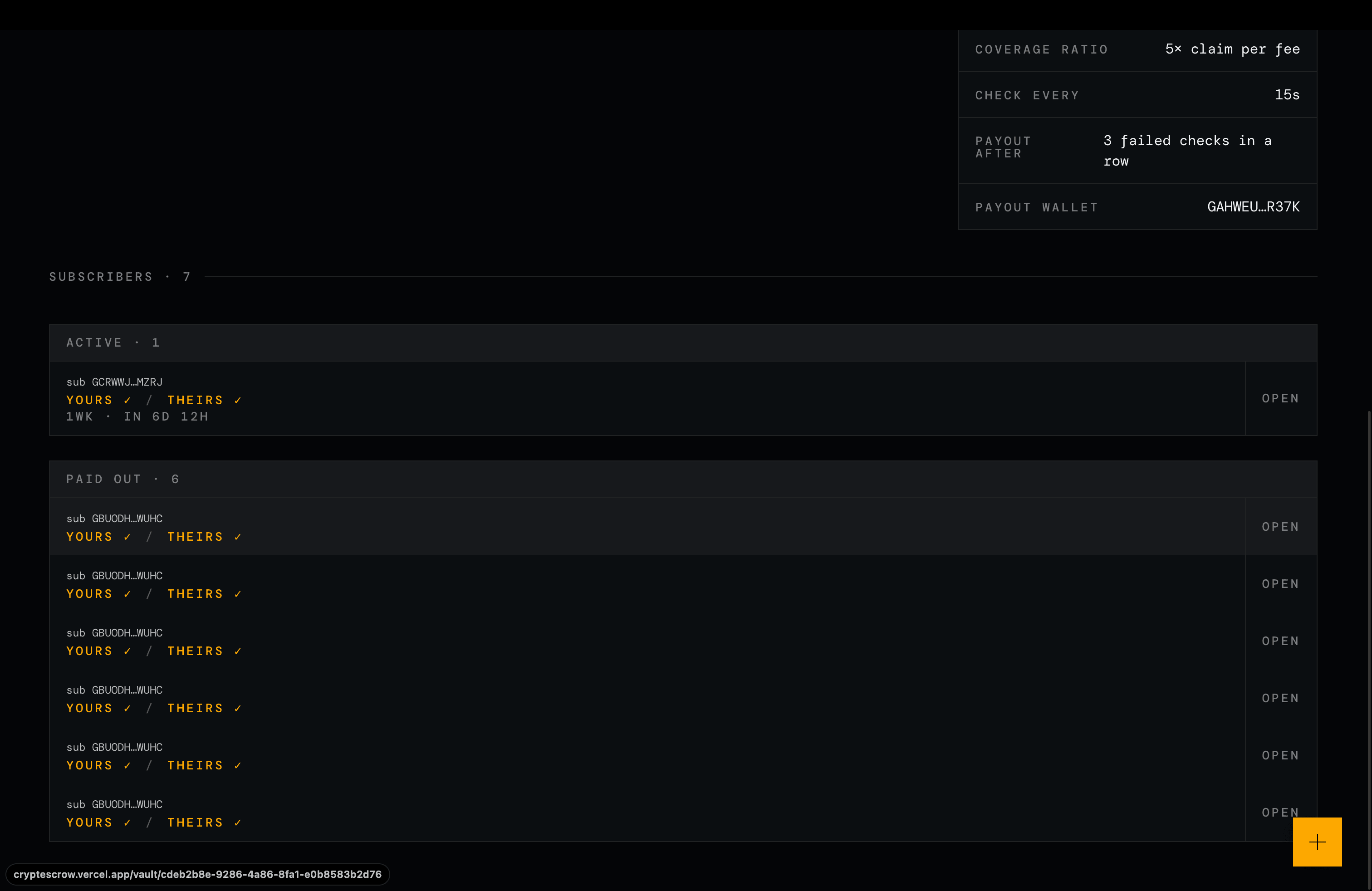
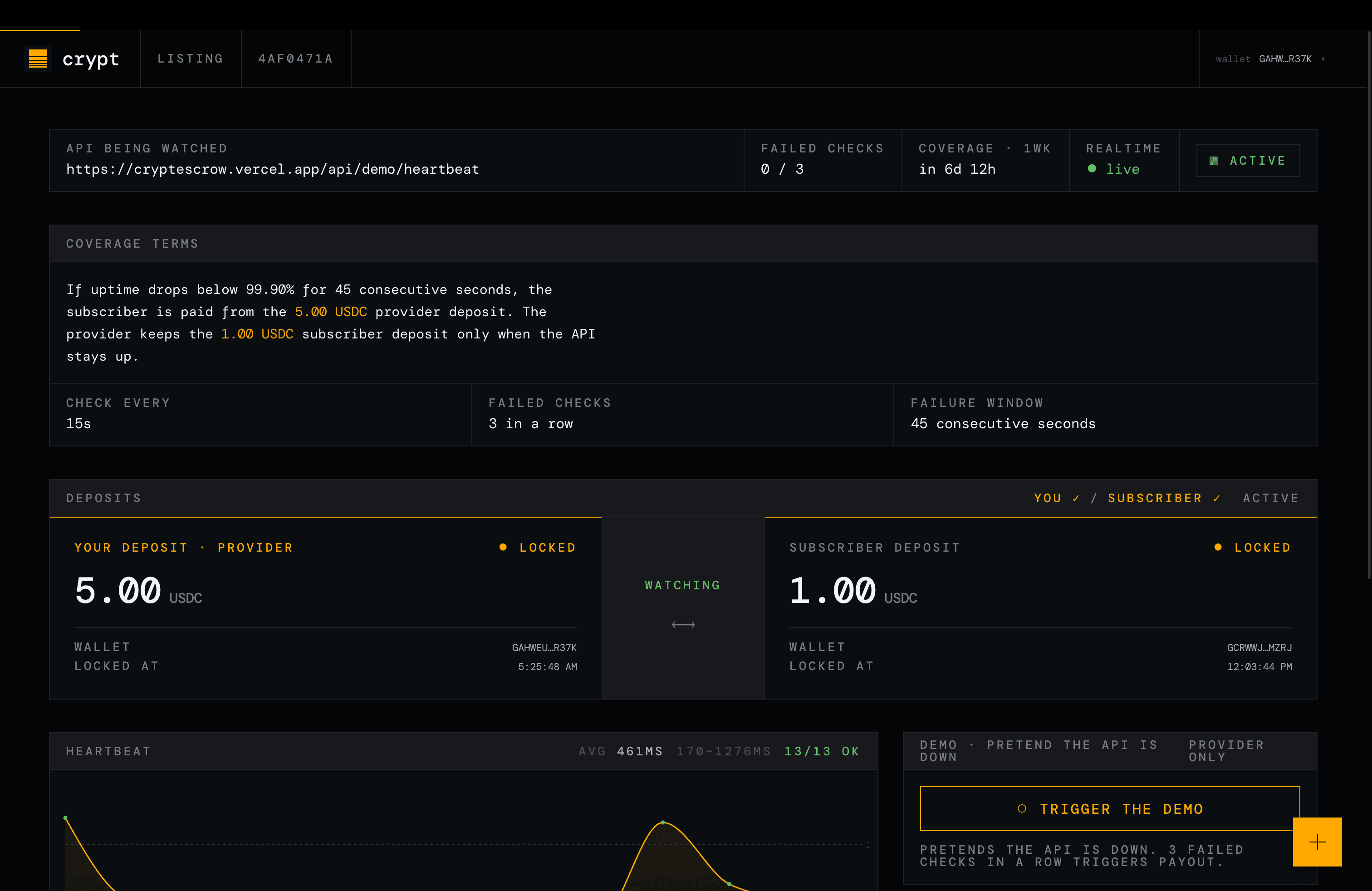
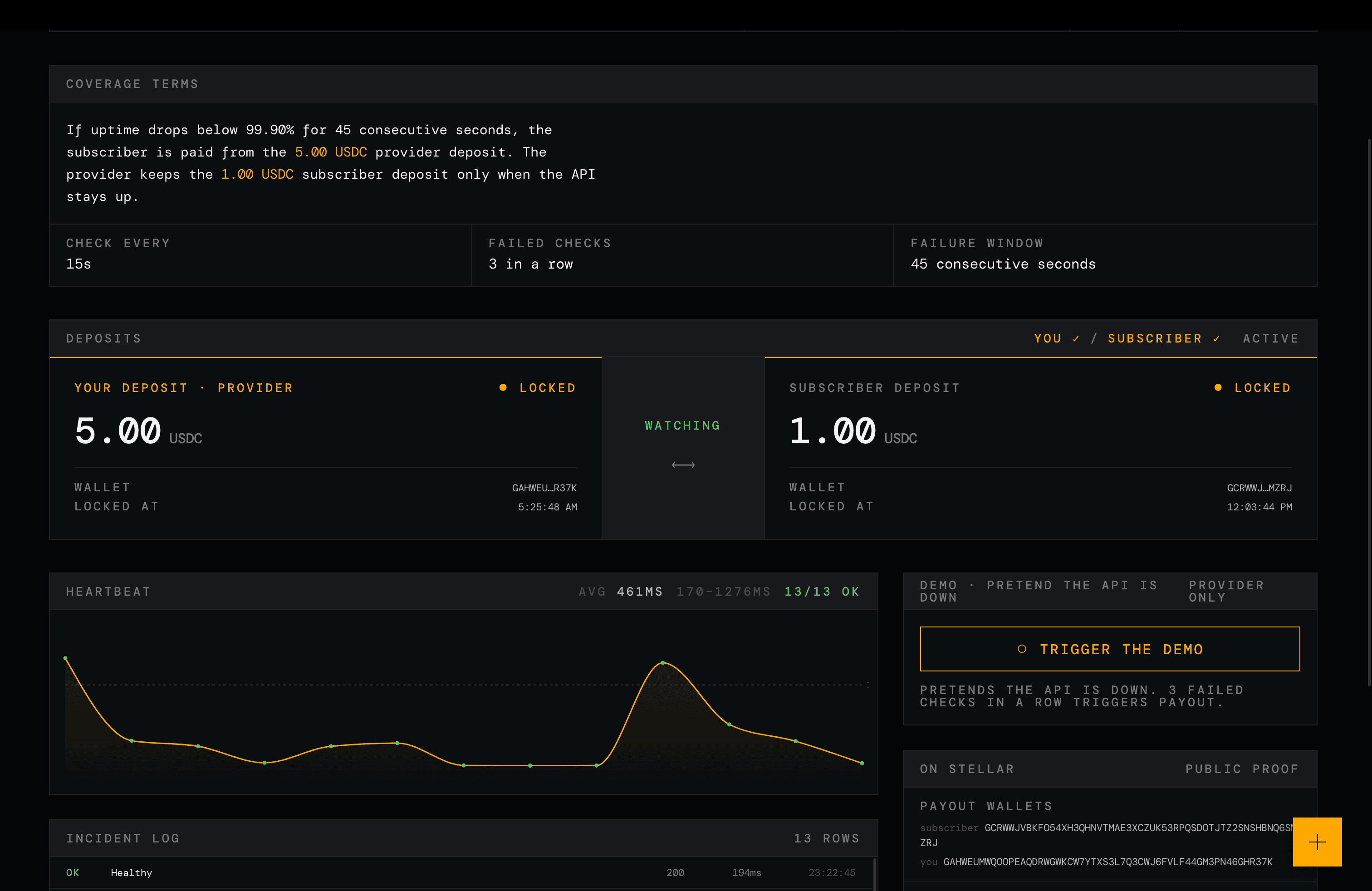
I designed and built the monitoring dashboard, multi-wallet sign-in, escrow creation flow, live heartbeat states, and transaction feedback. I also implemented the Soroban state machine and connected the interface to testnet contract activity.
decisions
- The UI treats funding, monitoring, threat, release, and refund as explicit states rather than hiding the contract lifecycle behind a generic wallet screen.
- Consecutive failures are required before settlement so one failed request cannot trigger a payout.
- The live demonstration includes a controlled failure path, making the complete state transition visible without pretending the prototype is a production oracle network.
evidence
- Deployed Soroban contract and testnet transaction links are documented in the repository.
- Contract tests cover state transitions, token transfers, authorisation, and invalid operations.
- Separate CI workflows validate the frontend and contract code.
limitations
This is a testnet prototype, not a production insurance product. The monitoring oracle is centralised, the contract is unaudited, and no real funds should be committed to it.